Blog

Dated Gender Messages From the Boy and Girl Scout Handbooks?

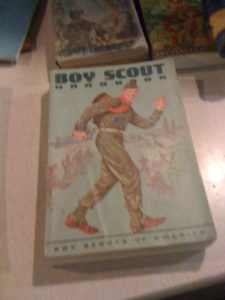
A new study was recently published in the journal, Gender & Society, regarding the gender stereotypical messages to the 5 million American kids that are reading the Boy or Girl Scout handbooks. According to the study it appears girl scouts are steered away from scientific pursuits while boys are discouraged from pursuing artistic interests.

“The disproportionate and gendered distribution of art and science projects aligns with the large body of research that finds girls being systematically derailed from scientific and mathematical pursuits and professions due to cultural beliefs and stereotypes about their relative ineptitude in these areas,” said Kathleen Denny, the sociology graduate student at the University of Maryland, College Park, who did the study.

Other key findings:

  • Girls are more likely than the boys to be offered activities involving art projects; girls’ art activities make up 11 percent of their total activities.
  • Scientifically-oriented activities make up only 2 percent of all girls’ activities, but boys science activities take up 6 percent of their scouting time.
  • Girls are offered proportionately more communal activities than boys; 30 percent of the girls’ badge work activities are intended to take place in groups, either with or for others.
  • Boys are offered proportionately more self-oriented activities than girls; less than 20 percent of the boys’ activities are intended to take place with others.

One of the most glaring findings was the names of Scout badges and the strong messages about gender they give.

  • 27 percent of girls’ badge titles use cute plays on words while none of boys’ badge titles do so.
  • All of boys’ badges have only specifically worded titles, while only 73 percent of the girls’ badges have specific titles. The boys’ badge dealing with rocks and geology, for example, is called the “Geologist” badge, while the comparable girls’ badge is called the “Rocks Rock” badge.
  • Badge titles for boys use a more career-oriented language (using such words as “Engineer,” “Craftsman,” “Scientist”), while the girls’ badge titles use the more playful terminology with less of a career orientation. (Instead of the boy’s “Astronomer,” the comparable girls badge is called “Sky Search.” Instead of “Mechanic,” a similar girl badge is called “Car Care.”)

This is only some of the findings from the study and we’re curious what you think. Especially SheHeroes readers who have both a boy and girl in Scouts. Both organizations have done so much for boys and girls for decades, and Girl Scouts has been the breeding ground for so many amazing SheHeroes. But are the manuals somehow helping to keep gender stereotypes alive and kicking?

Share
This entry was posted in Blog and tagged , , . Bookmark the permalink.

8 Comments on Dated Gender Messages From the Boy and Girl Scout Handbooks?

  1. DEbbie says:

    I have not and will not put my girls or boy in Scouts. This article just touches on some of the reasons. Boy Scouts close religious affiliations and accompanying prejudices are a show stopper for me. Girl Scouts is more open and welcoming which I like, but I can’t get excited about the girly girl club aspects. Too bad, and maybe my kids’ loss. I know there are lots of great things for kids in both organizations but I can’t take the bad with the good in this case.

  2. Renee says:

    A few parents and I volunteered at our elementary school’s library, reveiwing the collection, properly cataloging books, and weeding out books that might be damaged, dated, or inappropriate. You’d be suprised what we found. A book called Arthur Ashe: Dark Star of Tennis, books that talk about how daddies work and mommies stay home, etc. Times change, our attitudes change, and indeed, books and other media often change with it. To wit, here is what the author of this research had to say in her abstract:

    “The girls’ handbook conveys messages about approaching activities with autonomous and critical thinking, whereas the boys’ handbook facilitates intellectual passivity through a reliance on organizational scripts. Taken together, girls’ messages promote an “up-to-date traditional woman” consistent with the Girl Scouts’ organizational roots; boys’ messages promote an assertive heteronormative masculinity that is offset by facilitating boys’ intellectual passivity.”

    I bring up this quote because the blogger at Sheroes makes NO reference to the author’s thesis!!! While everything he or she cited may be accurately culled from the research, he or she did not give the WHOLE story. To me, misleading reporting is as bad as anachronistic attitudes. I wish folks would stop gaming the system for a desired outcome. Life is complex. Why must we make it simple?

  3. girl scout says:

    awesome infromation:_)

  4. Robyn says:

    I don’t like some of these disparities. One thing, though, I don’t think that most of the activities being “communal” for Girl Scouts is a problem. I think that the Boy Scout activities being so autonomous is a problem.

    I *am* planning on my daughter starting Girl Scouts in the fall, but *I* will be the troop leader. I will make it a clear priority to use the appropriate and scientific terms for our activities (astronomy, geology, forestry, zoology, agriculture) as well as to include science and math.

  5. Laura Lee says:

    I remember the “brownie” (junior girl scout) oath was “on my honor I promise to do my duty to love god and my country, to help other people every day, especially those at home.” Whereas my brother’s cub scout oath, was to “help other people and obey the law of the pack.”

    One thought about the story above: My partner is a Russian ballet dancer. We go around the country teaching students at different ballet schools and are disheartened by how few boys take ballet. Even studios that start with young boys tend to lose them around puberty when the teasing for doing a “sissy” thing like arts (especially ballet) gets too much for them.

    I found it interesting that the opening graph mentioned that girls were pushed away from science and boys away from arts, but that the next quote was about the shame of discouraging girls from math and science, not from discouraging boys from the arts.

    I don’t know if the idea that arts are feminine leads to them being devalued in our society, or if the idea that they are devalued leads them to be put in the feminine sphere– but something is going on, and it’s a shame for all of us.

  6. Pingback: Welcome to Monday ~ 2nd May 2011. |

  7. Pingback: Cookies, Badges and Lessons in Diversity | SheHeroes

  8. Pingback: Cookies, Badges and Lessons in Diversity

Please comment — your input is valuable!

Your email address will not be published. Required fields are marked *

*

You may use these HTML tags and attributes: <a href="" title=""> <abbr title=""> <acronym title=""> <b> <blockquote cite=""> <cite> <code> <del datetime=""> <em> <i> <q cite=""> <strike> <strong>